

What Does 'Legally Blind' Mean? Definition, Vision Thresholds, and What It Means Day to Day
November 20, 2026
Hearing the words "legally blind" from an eye doctor, or about someone you love, can raise a lot of questions at once. The phrase sounds final, yet many people who are legally blind read large print, recognize friends up close, and walk their own neighborhoods every day.
So what is legally blind in practical terms? It is a measurement threshold that agencies and eye care professionals use to decide who qualifies for certain services and support.
This guide explains the definition in plain language, shows how the thresholds work, describes what daily life can look like, and covers the tools and professionals that help. It is written for people who are blind or have low vision, including those with a new diagnosis, for their families, and for anyone who wants an accurate answer.
What Is Legally Blind? The Definition in Plain Language
In the United States, a person is legally blind when their vision meets one of two measurements in the better-seeing eye, using the best available correction, such as glasses or contact lenses. The American Foundation for the Blind (AFB) lists them as a visual acuity of 20/200 or less, or a visual field of 20 degrees or less.
Visual acuity is how sharply you see detail. At 20/200, a person sees at 20 feet what someone with typical eyesight sees at 200 feet.
Visual field is the total area you can see without moving your eyes. A field of 20 degrees or less is often called tunnel vision, and 20 degrees is roughly the width of two fists held side by side at arm's length.
Meeting either measurement is enough. Someone with sharp central vision but a very narrow field qualifies, and so does someone with a wide field but blurred detail.
Legal blindness is an administrative category that agencies use to decide eligibility for programs such as vocational rehabilitation, disability benefits, and low vision devices. The eye condition behind it, such as glaucoma or macular degeneration, is the diagnosis. Two people with the same legal status can see the world very differently.
Vision Thresholds: Acuity, Visual Field, and Where Low Vision Fits
Two tests answer the question of what is legally blind, and meeting either one is enough.
Other categories sit around those numbers. AFB describes low vision as acuity of 20/70 or poorer in the better eye that regular eyeglasses cannot correct.
A person at 20/100 therefore has low vision but is not legally blind, unless the visual field also meets the threshold. Total blindness means no light perception, recorded as NLP.
Glasses prescriptions are a separate measurement. A prescription such as minus 7 describes the lens power an eye needs, and acuity describes how well you see with that lens. No single prescription number equals legal blindness, which is why an eye care professional measures acuity directly, and the FAQ section answers the most common prescription questions.
Most People Who Are Legally Blind Have Some Sight
Legal blindness covers a wide range, and many people within it have usable vision. AFB notes that about 85 percent of people with eye disorders have some remaining sight, and about 15 percent are totally blind. So the answer to "can someone be legally blind but still see?" is yes.
What that sight looks like depends on the eye condition. The BrightFocus Foundation describes how common causes change vision:
- Age-related macular degeneration (AMD) affects central vision, which makes detail such as faces and print hard to see, while side vision often remains.
- Retinitis pigmentosa narrows the visual field into tunnel vision.
- Glaucoma can remove parts of the visual field and can also lower acuity.
- Diabetic retinopathy can reduce vision through swelling or bleeding in the retina.
Lighting and glare can change how much a person sees, so a clinic measurement is one snapshot of a person's vision.
What Legal Blindness Looks Like in Real Life
Daily life depends on how a person's remaining sight works, which tools they use, and the setting. These patterns are common:
- Reading and screens: Large print, handheld magnifiers, screen magnification, and screen readers such as VoiceOver, TalkBack, JAWS, and NVDA let people read mail, work in documents, and use phones. Some people also read braille.
- Home: Bright, glare-free lighting, high-contrast labels, tactile markers on appliances, and consistent places for everyday items reduce the effort of routine tasks.
- Work and school: Accommodations such as screen readers, magnification software, adjusted lighting, and accessible documents are common.
- Travel: A familiar route may feel easy in daylight, while unfamiliar places, night, glare, and crowds can change what a person can see. Many people combine tools and strategies, including a white cane for some routes or conditions.
People who are legally blind work, raise families, study, and travel. The practical question is which tools and training fit a person's vision on a given route and in a given light.
How Legal Blindness Is Determined and Who Can Help
An eye doctor, either an ophthalmologist or an optometrist, determines whether vision meets the definition. Acuity is tested with an eye chart while you wear your best correction, and a visual field test maps what you can detect in different parts of your vision. Your doctor can document the results for agencies that require them.
These questions are worth asking at the appointment:
- What is my acuity in each eye with the best correction?
- What is my visual field measurement?
- Do my results meet the legal definition of blindness?
- Would a low vision evaluation help?
- Can you provide written documentation for benefits or services?
Several professionals can help after the measurements:
- A low vision specialist, an eye doctor with additional training, assesses how you use your remaining sight and recommends magnifiers, lighting, and other devices.
- A certified orientation and mobility (O&M) specialist teaches safe, efficient travel, including cane skills and route planning.
- A vocational rehabilitation (VR) counselor at your state agency helps with training, employment, and workplace accommodations.
If you are newly diagnosed, ask about a low vision evaluation and an O&M assessment early.
Aids, Tools, and Mobility Options
Aids fall into two groups. Vision tools make the most of the sight you have, such as handheld and electronic magnifiers, screen magnification, task lighting, and screen readers. Mobility tools help you get from place to place.
Do people who are legally blind use a cane or another mobility aid? Some use a white cane every day, some only at night or in unfamiliar places, and some rarely. The choice follows how a person's sight works in different light and settings, along with their routes and comfort level.
A white cane gives information about the ground and obstacles within reach and signals to others that you have sight loss. A guide dog is a trained partner that leads you around obstacles and stops at curbs, while you decide when to cross. Both are proven tools, and an O&M specialist can teach the skills for either.
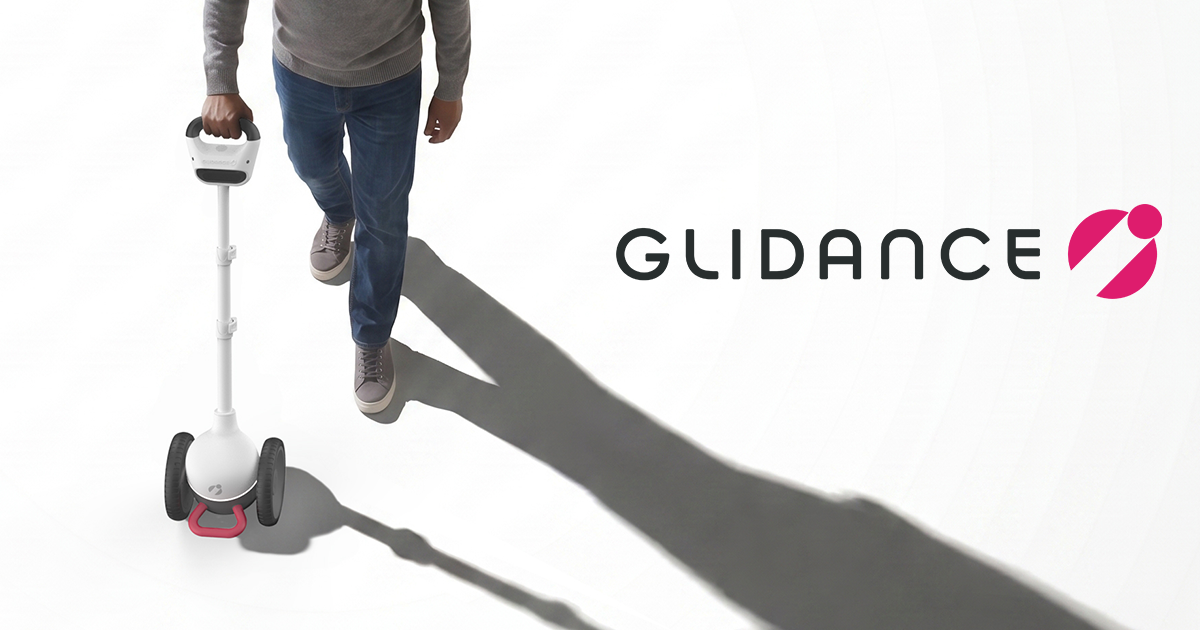
Glide, the smart primary mobility aid from Glidance for people who are blind or have low vision, is a third option alongside the white cane and the guide dog. You set the pace, and Glide steers and brakes for you, guiding you around obstacles and stopping at curbs and drop-offs.
Glide does not replace O&M training, and it is not weight-bearing, so it does not suit anyone who relies on a support cane or walker. One early pilot user wrote an honest comparison of Glide and a white cane.
Frequently Asked Questions
Can people who are legally blind still drive?
Generally not with an unrestricted license, because states set minimum standards for acuity, and often for visual field, that sit well above the legal blindness thresholds. Some states offer restricted licenses, and some allow bioptic telescopic lenses with extra evaluation and training.
Requirements differ by state and change over time, so check with your state's motor vehicle agency and ask your eye doctor or a low vision specialist what applies to you.
What benefits or government support do people who are legally blind qualify for?
Legal blindness can qualify a person for several kinds of support, depending on the program. The Social Security Administration uses these two measurements, lasting or expected to last at least 12 months, to define blindness for Social Security Disability Insurance (SSDI) and Supplemental Security Income (SSI), and it has special rules for people who are blind.
State vocational rehabilitation agencies offer training and employment support. Rules and amounts change, so confirm details with each agency.
Can a person be legally blind in only one eye?
Not by the standard definition, which measures the better-seeing eye. A person with severe sight loss in one eye and typical sight in the other is generally not legally blind. Loss in one eye can still affect depth perception and the edges of the visual field, so an eye doctor or low vision specialist can advise on practical adjustments for work and daily tasks.
Is 20/60 vision legally blind?
No. At 20/60, you see at 20 feet what someone with typical eyesight sees at 60 feet, which is far better than the 20/200 threshold. AFB describes low vision as 20/70 or poorer in the better eye, so 20/60 falls just outside that range too.
Glasses or contact lenses may still help, and an eye doctor can explain what your measurement means for daily tasks.
Is minus 7 legally blind?
Not by prescription alone. Minus 7 describes the lens strength an eye needs to correct nearsightedness, and legal blindness is measured with that correction in place. Many people with strong prescriptions see well with their glasses or contacts and are not legally blind.
Only a corrected acuity of 20/200 or worse, or a visual field of 20 degrees or less, meets the definition. Ask your eye doctor for your corrected acuity in each eye.
What glasses or contact lens prescription is legally blind, and what is 20/200 vision in minus?
No single prescription number equals legal blindness. A prescription measures lens power, and 20/200 measures sharpness with correction, so the two do not convert directly.
Many people with strong nearsightedness see 20/200 or worse without glasses and see clearly with them, which does not make them legally blind. The definition applies to the best corrected result, and your eye doctor can give you the measured values.
What is considered legally blind without glasses?
Legal blindness is measured with glasses or contact lenses, so vision that is poor without them but clear with them does not meet the definition. If acuity stays at 20/200 or worse with the best lenses, or the visual field is 20 degrees or less, it does. Eye conditions such as macular degeneration often limit sharpness in ways regular glasses cannot correct.
What is legally blind in Texas, and does the definition differ by state?
The U.S. definition is 20/200 or less in the better eye with correction, or a visual field of 20 degrees or less. Texas uses the same numbers in Chapter 91 of its Human Resources Code, and the Texas Medicaid handbook follows Social Security standards.
Other states may word the definition differently, and programs, driver licensing, and school services set their own eligibility rules, so confirm requirements with the agency you are working with.
Putting the Definition to Work
What is legally blind? It is a measurable threshold: 20/200 or worse in the better eye with correction, or a visual field of 20 degrees or less. It covers a wide range of sight, and many people in that range have usable vision.
The label's main practical value is access to eye care, rehabilitation, benefits, and training, so it helps to know your own measurements and keep them in writing. A low vision specialist, an O&M specialist, and a VR counselor can each answer a different part of how to live and travel the way you want.
When mobility comes up, they can walk through the options with you, including the white cane, the guide dog, and Glide. Knowing the numbers is a practical starting point, and the people and tools around you can build from there.
Post Author
Jonathan Kalan
Jonathan Kalan is Head of Marketing & Brand at Glidance. For the past decade, his work has been focused on building, launching and communicating category-defining products, brands and experiences.
Ready to Glide?
Sign up below to receive more information about Glide, get in touch with our team, and secure your spot on our waitlist for when we re-open orders!


